
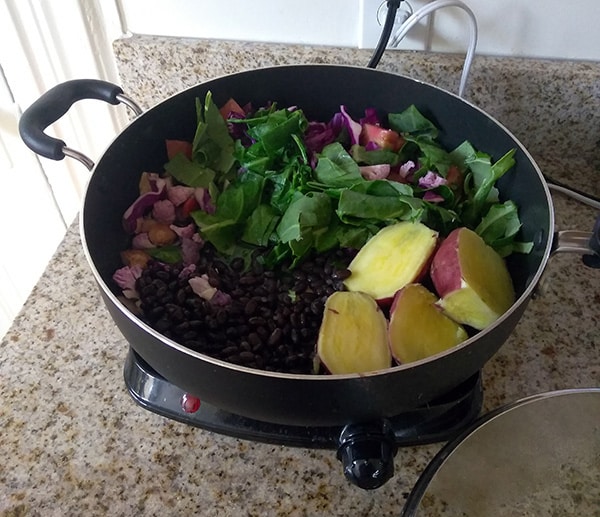
The nutrition part of the Brian Johnson Longevity Blueprint Protocol might make you really hungry,
And why it takes more than a perfect whole-foods plant-based diet to reverse aging.
(Be forewarned! I’m just a lowly human trying not to die and not a medical authority, or a nutritionist)
A Whole-food plant-based diet (WFPB) is the foundation for life-extension using Bryan Johnson’s protocols, but you might need to tweak it so you wont be hungry all the time.
Read part one of my review of the Blueprint for longevity by Bryan Johnson and what supplements might be missing.
I watched his amazing documentary and came up with some improvements😊
Not really, these are just some thoughts on being successful with his protocols. If you eat the way he does, you might become too hungry and begin binging on high caloric foods to compensate, and get fat and unhappy, so I suggest a few tweaks.
The plant-based diet with caloric restriction is the foundation of Bryan Johnson’s plan and he wouldn’t be able to improve his health without it.
He grows most of his own food because he hasn’t been able to find organic food that meets his standards for being free of heavy metals. It must be nice to be a billionaire.
Though a small garden isn’t out of reach for many of us. If you want to improve your own soil and grow organic food, it isn’t hard to grow kale and other greens. I did it for a year on a postage sized plot of land I rented in a community garden. I used a special organic mineral mix on the soil and it was incredible.
I had more vegetables than I could eat, zucchini, lettuce tomatoes, kale and other greens and spices. And I’m super lazy and don’t know that much about gardening.
The thing I find odd about Bryab Johnson’s blueprint is the olive oil
In the whole foods plant-based world oil is one of the things to avoid along with sugar, salt and processed foods like flour and junk food. There have been many studies about the toxicity of vegetable oils.
Oil has been found to damage epithelial cells of the blood vessels. Eating olive oil seems like a risky thing to do when you are trying to live forever. But maybe olive oil is exempt from the horrors of other oils, and he is treating it like MCT oil.
Why not just stick to real olives, real nuts and seeds in their whole form? Low fat high fiber volumetric eating has been a proven weight loss and health promoting strategy.
Why is Bryan Johnson eating so much fat?
Related to the olive oil thing I wonder about is his high fat diet. He eats 40 percent of calories from fat. Macadamia nuts are delicious and nutritious but should be kept down to 3 or 4 a day for most of us because they really pack on the calories.
There are many nuts and seeds that are lower in calories than macadamias but also rich in nutrients, pumpkin seeds, walnuts, chia and flax for instance. And you don’t need more than a handful a day for most people.
In most WFPB diets they tend to suggest 10 to 20 percent of your calories from fat and protein and the rest from carbohydrates in the form of green leafy and non-starchy fruits and veggies and a cup or two per meal coming from beans, sweet potatoes, and whole grains.
Oil is not a whole food
Oil does not grow on trees. If you abstain from these high fat foods and processed foods, it is easy to maintain your weight on a high fiber whole foods diet without experiencing hunger all the time.
Just watch out for the tasty avocado. A little is ok but every day might not work for you if you need to lose weight.
Many people will fail if they try to stick to the high-fat diet that the blueprint protocol calls for.
So, skip the olive oil and macadamia nuts if you need to lose weight and instead stuff yourself with beans, sweet potatoes, quinoa, wild rice, squash, and other starchy foods.
But make sure to eat your greens first. The low-caloric non-starchy veggies and fruits are full of minerals and micronutrients, and we have a tendency not to eat enough veggies in favor of the higher calorie starches.
Maybe the high fat content is keeping Bryan Johnson overly hungry?
He states in the documentary that he is pretty hungry all the time.
Most people on a low-calorie high-nutrient plant-based diet are not hungry because they eat high-volume low -fat diet. You need 2 to 5 pounds of whole natural high fiber plant food a day for the stretch receptors in your stomach and intestines to register satiety.
That is why we tend to overeat on high calorie low fiber processed foods and get fat and then remain fat even if we try to eat less of the same processed crap. It just cannot be done because your body is looking for volume.
The trick to a WFPB diet is that you lose weight while staying full because potatoes, beans, rice, quinoa, plus huge piles of raw and cooked non starchy veggies like kale, carrots, bokchoy, eggplant etc. are mostly fiber, minerals and water.
So, you normally sit down to a pound or two of greens per meal like Bryan does, but unlike Bryan you would not have one sweet potato a day but a heap of starchy veggies like beans rice or sweet potatoes or a whole grain.
You would skip the olive oil since one tablespoon of olive oil is equal to a huge plate of sweet potatoes in caloric content.
Many fruits, especially berries, are high in nutrients and are mostly water and fiber and low in calories. So, you can fill up on non-starch fruits and veggies and feel full and never hungry on a WFPB diet if you cut your fats down and don’t add oil or too many nuts and seeds.
If you eat starchy higher fat fruits like bananas or durian keep them to a minimum if you are trying to lose weight.
“Portion control” is not the key for weight loss
Low fiber volume food with high caloric content is why serving size and portion control do not work. If you eat a tiny piece of meat the size of a deck of cards, as we have been instructed to and have a tablespoon of oily salad dressing with your salad it is hard to maintain a healthy weight because you are only eating a quarter of a pound of food at one sitting.
The human body is designed and programmed to eat several pounds of high-fiber low fat-plant matter per day. Animal products and high-fat foods like cheese and oil were scarce for most of human existence.
If you’re having trouble with Bryan Johnson’s diet protocol you might want to swap out some of the fat for more starchy whole foods like more sweet potatoes and more grains or squash.
What about just doing the WFPB diet and not doing all the supplementation Bryan Johnson advises? It would save money, but you wouldn’t get the same results. It would be a big improvement on the standard diet, yes. But dietary changes alone are not enough to stave off disease and premature aging.
It takes more than just a whole food plant-based diet for meaningful age reversal
A whole plant-based diet, even with soil testing, totally organic, with B12 and omega 3 is not enough.
I have been watching how whole foods plant-based specialists are aging and they are not doing as well as they could.
Whole-foods plant-based (WFPB) experts mostly abhor the use of any supplements or synthetic protocols in favor of food only. They only supplement B12 and omega 3 and perhaps a few other things.
But the WFPB movement needs to rethink their beliefs since longevity supplements are coming along so nicely and giving such great results.
If WFPB MDs and specialists were to test biomarkers for aging I wonder how Dr. Joel Fuhrman, Ocean Robbins, Dr. Gregar, Dr. Neal Bernard, and Dr, Goldhammer of True North, would actually do compared with Bryan Johnson.
Out of all of them only Dr. Fuhrman has aged well, and he advocates more supplementation than the others on the list.
I wonder if Dr. McDougall, world renowned nutrition MD, would still be alive and healthy if he had taken anti-aging protocols along with his perfect whole foods plant-based diet. He had a stroke at the age of 19 and showed signs of dementia in later years and then died last year at the age of 77. And he looked old and frail when he died.
Would Chef AJ be free from lung cancer if she had been doing some of the anti-aging protocols Bryan Johnson is doing?
You get great results just by removing processed foods… at first
When you look at the hundreds of before and after stories at Forks Over Knives, people have made excellent recoveries from disease and had great results with lasting weight loss for years after they take out the processed foods and start eating plant-based.
But wouldn’t this all work better if they were also doing anti-aging protocols on top of the foundation of a healthy diet with modest calorie restriction?
Zoe Zuniga
Certified Pilates InstructorZoe has been teaching Pilates groups and privates for over 20 years and is certified through Stott and Physical Mind Institute.